
BAUXİTE
What is bauxite?
It is a mixture of aluminium oxides and hydroxides with a hardness of 1 to 3 and a density of 2.5 to 3.5 g/cm³.
Its chemical formula is usually 'Al2O3NH2O'. However, the formula may vary as the minerals in it differ.
Properties of Bauxite
Bauxite, consisting of aluminum oxide and minerals such as boehmite, gibbsite, corundum and diasporite,
is a heterogeneous mixture and has an amorphous structure.
It usually contains iron oxide, silicon oxide and titanium oxide.
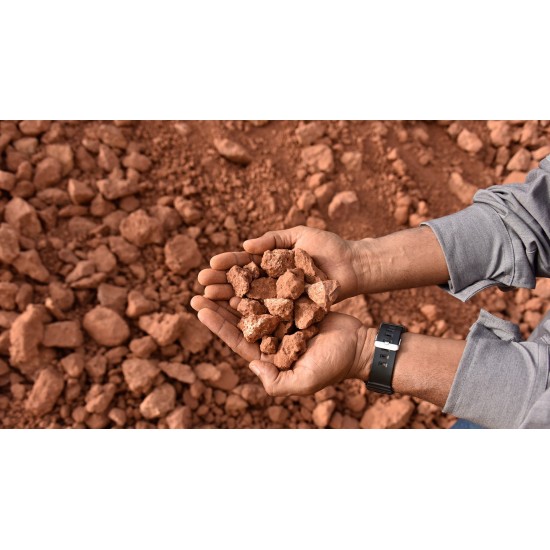
It is generally found in oolitic, massive, soil and clay forms.
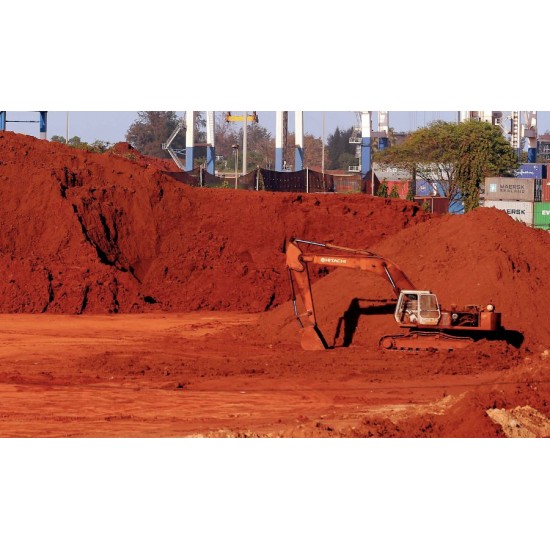
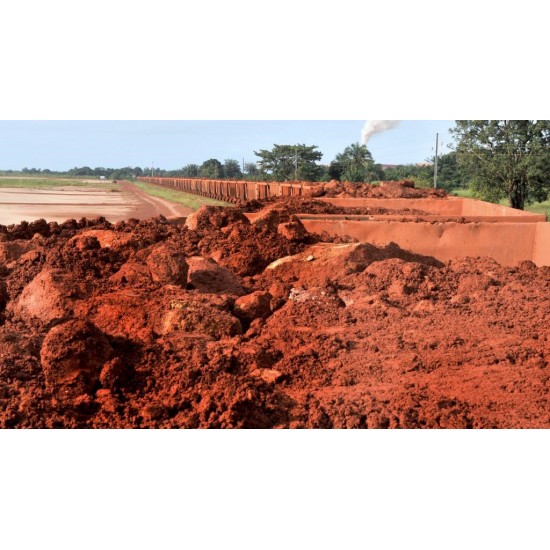
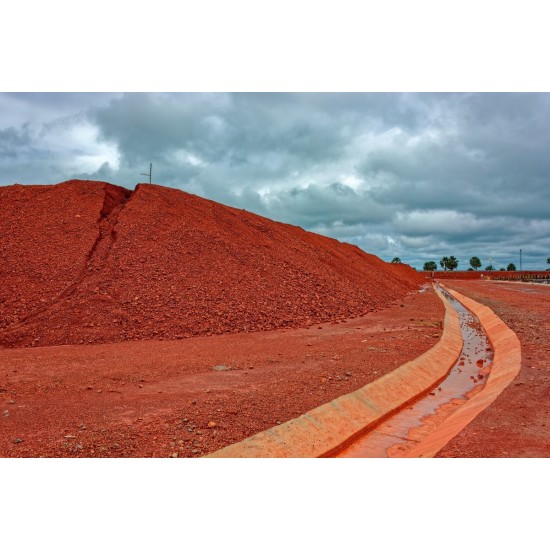
Depending on the amount of iron it contains, its color may be white, yellow, green, grey, red or brown.
99% of the world's aluminum production is obtained from this ore, and bauxite production is increasing in parallel with the demand for aluminum.
It is also frequently used in bauxite, cement, iron and steel, refractory and abrasive industries.
In this respect, bauxite ore has an important place in world trade. World bauxite production reached 350 million tons annually as of 2015.
More than 160 million tons of bauxite are mined every year.
World bauxite reserves are estimated to be 55 to 75 billion metric tons.